After each new frozen mammoth discovery I hear people ask, "why is it only mammoths?" The simple answer is that it isn't just mammoths. Lots of Pleistocene animals have been found frozen in the far north. Besides mammoths, there have been woolly rhinoceroses, bison, musk oxen, horses, beavers, and oodles of ground squirrels. Mammoths get all the attention because, as has been said of dinosaurs, "they're big, scary, and dead," but also because they're elephants and we have a special fondness for elephants. Just a few weeks ago, another frozen mammal was found that should have had more press. This one not only met the "big, scary, and dead" test, but it was also an animal that we're rather fond of: lions.
There were two of them of an extinct species called cave lions (Panthera spelaea). They once roamed the entire tundra north from the British Isles across northern Eurasia and Beringia to the Yukon. Because there are far fewer predators than prey in any ecosystem, the odds of finding well preserved individuals are more remote. In fact, we've never found a complete cave lion carcass or skeleton. Now we have two complete bodies.
In this case the internet really fell down on the job. These an not just lions; they are lion cubs--kittens. Isn't this the reason the internet was built?
Friday, November 13, 2015
Wednesday, October 14, 2015
The First Trilobite
NOTE: In honor of National Fossil Day here's a post I wrote five years ago about a famous trilobite.
In their early days, scientific journals were much more generous than they are today about publishing letters from experimenters and collectors in all walks of life. The hard wall between scientists and amateurs had not yet been built and all literate people were, in theory, entitled to participate in the discussion. One such person was Rev. Edward Lhwyd (or Lhuyd or Lhwid or Lloyd), the illegitimate son of a member of the minor gentry who rose from genteel poverty to become keeper of collections at the Ashmolean Museum in Oxford (an unpaid position, but important in the community of science). The 1698 volume of The Philosophical Transactions of the Royal Society, the oldest scientific journal in the English language, contains "Part of a Letter from Mr. Edw. Lhwyd to Dr. Martin Lister, Fell. of the Coll. of Phys. and R. S. Concerning Several Regularly Figured Stones Lately Found by Him." The two-page letter is accompanied by a page of etchings of the figured stones or, as we would call them, fossils.
Lhwyd collected his fossils during a trip to Southwestern Wales. Number fifteen, in his etchings, he found near Llandeilo, probably on the grounds of Lord Dynefor's castle. He wrote of it: "The 15th whereof we found great Plenty, must doubtless be referred to the Sceleton of some flat Fish..." A century and a half after he wrote that, Sir Roderick Murchison would place the Llandeilo rocks in the middle strata of his Ordovician Period. A century after Murchison, scientists would date that strata between 461-63 million years old. That is less than ten million years after the first plants took root on dry land and a hundred million years before cockroaches crawled out of the sea looking for a snack.

Lhwyd's "flatfish." Today we call it Ogygiocarella debuchii (Brongniart).
Lhwyd's identification of number fifteen as a flatfish didn't last very long. Today anyone with even a casual knowledge of fossils will recognise it as a trilobite, something more like a shrimp than a halibut. Lhwyd didn't have our advantage of hundreds of years of fossil studies producing thousands of lavishly illustrated and easily accessible books. It would be almost a century before the word "trilobite" would be coined and into Murchison's time before the scientific world would realize that trilobites were not related to halibut or shrimp (or oysters, another contender) but, rather, something entirely their own. Lhwyd was plunging ahead in the dark trying to make sense of an unfamiliar and mysterious corner of nature.
Lhwyd deserves great credit for deciding his little flatfish was worthy of notice and for sending his drawings to the Royal Society, although, sometimes, he gets a little too much credit. His illustration is the first published scientific illustration of a trilobite that we know of, but he did not "discover" trilobites, as some books will tell you. We should always regard any claim that someone discovered a fossil species with suspicion. Trilobites are extremely common fossils and can be found laying on the surface in many parts of the world. Our ancestors were both aware of fossils and, in many cases, aware that they were the petrified remains of once living things. Usually, what an author means when they declare that this person or that person discovered a fossil is that they were the first to describe the fossil in scientific literature. Lhwyd's illustration certainly counts as a description in that sense, but it is not the first description we know of.
No one can say when people first noticed that fossils were different than other rocks except to say that it was very long ago. The first step in making stone tools is to examine stones very carefully, so it is possible that our ancestors were aware of organic patterns in rocks over a million years ago. For trilobites, specifically, the earliest evidence of humans treating a fossil as something specially comes from a cave near Yonne, France. In the 1880s, when archaeologists were combing the caves of central France looking for artifacts, bones, and paintings, they discovered a much handled trilobite fossil that had been drilled as if to be worn as a pendant. The cave where it was found is now known as Grotte du Trilobite and is also home to paintings of mammoths and woolly rhinoceroses. Because the pendant was handled so much, the exact species of trilobite cannot be determined, however, geologists can say that it was not originally from Yonne. The original owners of the fossil thought enough of it that they carried or traded it from the other side of France. The occupation strata in which the trilobite was found has been dated as fifteen thousand years old.

The oldest known human trilobite artifact from the Grotte du Trilobite.
In the New World, American fossil hunters found plentiful deposits of trilobites in western Utah in the 1860s, but the local Ute Indians had known about them for untold years. In 1931, Frank Beckwith uncovered evidence of the Ute use of trilobites. Travelling through the badlands, he photographed two petroglyphs that most likely represent trilobites. On the same trip he examined a burial, of unknown age, with a drilled trilobite fossil laying in the chest cavity of the interred. He asked Joe Pichyavit, a Ute friend, what the elders said about such fossils. Pickyavit replied that trilobite necklaces were worn as protection against disease and bullets. The local Ute name for trilobite fossils translated roughly as "little water bug in stone," indicating that they recognised the organic nature of fossils. Pickyavit then made a necklace for Beckwith in the old style. Since then, trilobite amulets have been found all over the Great Basin, as well as in British Columbia and Australia.

Probable trilobite petroglyph. Beckwith's label reads "A shield (?) shaped like a trilobite."

Joe Pickyavit's trilobite protective necklace made of fossils, clay beads, and horsehair tassels.
Written descriptions of trilobites before Lhywd date possibly from the third century BC and definitely from the fourth century AD. Most ancient literatures include a genre called lapidaries, catalogs of precious stones and minerals along with their practical uses in medicine and magic (often the same thing). Most of the lapidaries included discussions of fossils and one, On Petrifactions by Theophrastus, was entirely about fossils. Sadly, the book has not survived and we know only short quotes from it in the works of later authors. The Spanish geologists Eladio Liñán and Rodolfo Gozalo argue that some of the fossils described in Greek and Latin lapidaries as scorpion stone, beetle stone, and ant stone refer to trilobite fossils. Less ambiguous references to trilobite fossils can be found in Chinese sources. Fossils from the Kushan formation of northeastern China were prized as inkstones and decorative pieces. A dictionary commentary written around 300AD by Guo Pu, refers to these fossils as bat stones because the spines on the pygidium (rear section) resemble the bones of a bat wing. The Khai-Pao Pharmacopoeia, written in 970 refers to the fossils as stone silkworms. Just nine years before Lhywd sent his letter to the Royal Society, Wang Shizhen wrote about the Kushan formation fossils a narrative of his travels in North China.
None of this should diminish Lhywd's place in the history of paleontology. Lhywd's observations were made within the framework of the emerging Western concept of science. The fossils were not interesting oddities that he found in the course of doing something else; they were the object of his outing. Lhywd took an artist along with him on his trip to Wales for the express purpose of preparing scientific illustrations. He communicated his observations to other scientifically interested people with the understanding that they would get further distribution. Finally, Lhywd gathered his fossils and took them back with him to the Ashmolean Museum where others would be able to study them.
As for number fifteen, it's not clear whether the fossil trilobite itself has survived. Modern curators at the Ashmolean have tried to identify Lhwyd's fossils in their collections. They have one old trilobite that approximately matches number fifteen, but they are unable to make a positive identification. The Romantic in me hopes its the one.

Number fifteen?
In their early days, scientific journals were much more generous than they are today about publishing letters from experimenters and collectors in all walks of life. The hard wall between scientists and amateurs had not yet been built and all literate people were, in theory, entitled to participate in the discussion. One such person was Rev. Edward Lhwyd (or Lhuyd or Lhwid or Lloyd), the illegitimate son of a member of the minor gentry who rose from genteel poverty to become keeper of collections at the Ashmolean Museum in Oxford (an unpaid position, but important in the community of science). The 1698 volume of The Philosophical Transactions of the Royal Society, the oldest scientific journal in the English language, contains "Part of a Letter from Mr. Edw. Lhwyd to Dr. Martin Lister, Fell. of the Coll. of Phys. and R. S. Concerning Several Regularly Figured Stones Lately Found by Him." The two-page letter is accompanied by a page of etchings of the figured stones or, as we would call them, fossils.
Lhwyd collected his fossils during a trip to Southwestern Wales. Number fifteen, in his etchings, he found near Llandeilo, probably on the grounds of Lord Dynefor's castle. He wrote of it: "The 15th whereof we found great Plenty, must doubtless be referred to the Sceleton of some flat Fish..." A century and a half after he wrote that, Sir Roderick Murchison would place the Llandeilo rocks in the middle strata of his Ordovician Period. A century after Murchison, scientists would date that strata between 461-63 million years old. That is less than ten million years after the first plants took root on dry land and a hundred million years before cockroaches crawled out of the sea looking for a snack.
Lhwyd's identification of number fifteen as a flatfish didn't last very long. Today anyone with even a casual knowledge of fossils will recognise it as a trilobite, something more like a shrimp than a halibut. Lhwyd didn't have our advantage of hundreds of years of fossil studies producing thousands of lavishly illustrated and easily accessible books. It would be almost a century before the word "trilobite" would be coined and into Murchison's time before the scientific world would realize that trilobites were not related to halibut or shrimp (or oysters, another contender) but, rather, something entirely their own. Lhwyd was plunging ahead in the dark trying to make sense of an unfamiliar and mysterious corner of nature.
Lhwyd deserves great credit for deciding his little flatfish was worthy of notice and for sending his drawings to the Royal Society, although, sometimes, he gets a little too much credit. His illustration is the first published scientific illustration of a trilobite that we know of, but he did not "discover" trilobites, as some books will tell you. We should always regard any claim that someone discovered a fossil species with suspicion. Trilobites are extremely common fossils and can be found laying on the surface in many parts of the world. Our ancestors were both aware of fossils and, in many cases, aware that they were the petrified remains of once living things. Usually, what an author means when they declare that this person or that person discovered a fossil is that they were the first to describe the fossil in scientific literature. Lhwyd's illustration certainly counts as a description in that sense, but it is not the first description we know of.
No one can say when people first noticed that fossils were different than other rocks except to say that it was very long ago. The first step in making stone tools is to examine stones very carefully, so it is possible that our ancestors were aware of organic patterns in rocks over a million years ago. For trilobites, specifically, the earliest evidence of humans treating a fossil as something specially comes from a cave near Yonne, France. In the 1880s, when archaeologists were combing the caves of central France looking for artifacts, bones, and paintings, they discovered a much handled trilobite fossil that had been drilled as if to be worn as a pendant. The cave where it was found is now known as Grotte du Trilobite and is also home to paintings of mammoths and woolly rhinoceroses. Because the pendant was handled so much, the exact species of trilobite cannot be determined, however, geologists can say that it was not originally from Yonne. The original owners of the fossil thought enough of it that they carried or traded it from the other side of France. The occupation strata in which the trilobite was found has been dated as fifteen thousand years old.
In the New World, American fossil hunters found plentiful deposits of trilobites in western Utah in the 1860s, but the local Ute Indians had known about them for untold years. In 1931, Frank Beckwith uncovered evidence of the Ute use of trilobites. Travelling through the badlands, he photographed two petroglyphs that most likely represent trilobites. On the same trip he examined a burial, of unknown age, with a drilled trilobite fossil laying in the chest cavity of the interred. He asked Joe Pichyavit, a Ute friend, what the elders said about such fossils. Pickyavit replied that trilobite necklaces were worn as protection against disease and bullets. The local Ute name for trilobite fossils translated roughly as "little water bug in stone," indicating that they recognised the organic nature of fossils. Pickyavit then made a necklace for Beckwith in the old style. Since then, trilobite amulets have been found all over the Great Basin, as well as in British Columbia and Australia.

Written descriptions of trilobites before Lhywd date possibly from the third century BC and definitely from the fourth century AD. Most ancient literatures include a genre called lapidaries, catalogs of precious stones and minerals along with their practical uses in medicine and magic (often the same thing). Most of the lapidaries included discussions of fossils and one, On Petrifactions by Theophrastus, was entirely about fossils. Sadly, the book has not survived and we know only short quotes from it in the works of later authors. The Spanish geologists Eladio Liñán and Rodolfo Gozalo argue that some of the fossils described in Greek and Latin lapidaries as scorpion stone, beetle stone, and ant stone refer to trilobite fossils. Less ambiguous references to trilobite fossils can be found in Chinese sources. Fossils from the Kushan formation of northeastern China were prized as inkstones and decorative pieces. A dictionary commentary written around 300AD by Guo Pu, refers to these fossils as bat stones because the spines on the pygidium (rear section) resemble the bones of a bat wing. The Khai-Pao Pharmacopoeia, written in 970 refers to the fossils as stone silkworms. Just nine years before Lhywd sent his letter to the Royal Society, Wang Shizhen wrote about the Kushan formation fossils a narrative of his travels in North China.
None of this should diminish Lhywd's place in the history of paleontology. Lhywd's observations were made within the framework of the emerging Western concept of science. The fossils were not interesting oddities that he found in the course of doing something else; they were the object of his outing. Lhywd took an artist along with him on his trip to Wales for the express purpose of preparing scientific illustrations. He communicated his observations to other scientifically interested people with the understanding that they would get further distribution. Finally, Lhywd gathered his fossils and took them back with him to the Ashmolean Museum where others would be able to study them.
As for number fifteen, it's not clear whether the fossil trilobite itself has survived. Modern curators at the Ashmolean have tried to identify Lhwyd's fossils in their collections. They have one old trilobite that approximately matches number fifteen, but they are unable to make a positive identification. The Romantic in me hopes its the one.

Saturday, October 3, 2015
Mammoth in the News: Michigan Edition
You might have seen in the news yesterday that a mammoth was found in Michigan. A new mammoth find is always cool and this one has a few elements that make it pretty exciting. I have some questions about it and there is one aspect of the story and accompanying pictures that I find fairly disturbing.
NOTE: Though the story has been picked up by most major news outlets, the source for most of the coverage is these two stories from MLive, a group of regional newspapers in Michigan (one, two). The Washington Post story was able to add a little by interviewing Dan Fisher, the paleontologist directing the excavation (link).
First, the story. On Monday, James Bristle and a friend were digging a hole in a new piece of land Bristle had just acquired. The hole was to be the base of a lift station for a new natural gas line being built. A few feet down, they brought up something long, narrow, and curved. At first they thought it was an old bent fence post, but once they had cleared some mud off of it, they saw that it was a huge rib. Bristle brought his family to look the rib and other bones he uncovered. On Tuesday, he called the University and was put in contact with their paleontology professor, Dan Fisher. Fisher came out Wednesday night and by the morning he was sure they had woolly mammoth on their hands. His initial theory is that the mammoth was butchered, and possibly killed by humans, and that the parts they discovered had been sunk in a cold pond for storage.
Here's the exciting part. Mammoths are not common in Michigan. Mastodons are. The state fossil of the Michigan is the mastodon. Fisher says this is only the eleventh significant mammoth find in the state while there have been over 300 mastodon finds. “We get calls once or twice a year about new specimens like this,” but they're always mastodons. If he's right that it was butchered by humans, that's even more exciting. Very few mammoths have ever been found that unambiguously show evidence that humans killed or butchered them.
Here are my questions. Based on what I can gather from the news reports, Fisher's theory seems reasonable, but, of course, I want to know more. What makes him think it was butchered? The reports say they found a flint cutting tool at the site. It's possible that the tool was left there at another time, but, if it was found intermingled with the bones, it's far more likely that it was deposited at the same time as the mammoth. The clincher will be if they find butcher marks on the bones--that is, gouges on the bones made by sawing meat off. I'd also like to know more about the pond refrigeration theory. This technique was practiced in the region and can keep meat safe to eat for over a year, though it tastes and smells awful by the first summer. I want to know if there's any way to confirm that this is really what was done with this particular mammoth. Third, Fischer thinks the mammoth was about forty when it died. He most likely figured this out by counting the growth rings in the ivory (mammoths and elephants show annual layers just like trees). One of the tusks was broken about half way up during the recovery, making that technique possible on the site. Adult elephants grow a new set of teeth every ten years or so. Did he deduce it from that? I want to know more about everything.
Now the disturbing part. After Dr. Fisher determined that the bones were mammoth remains, farmer Bristle gave him the rest of the day to get the bones out of his field before he planned to go back to building his lift station. This makes no sense to me. I understand that there are people who care so little about science that one day's inconvenience is all they're willing tolerate for knowledge. But that still doesn't explain the rush. Why is he building the lift station? Shouldn't the pipeline company be doing that? Shouldn't they be setting the schedule? Because they were found on private property, the bones are legally Bristle's. At press time, he hadn't decided whether he was going to donate the bones to the university after they finished examining them, so he has some interest in them. Even if his interest is only in selling them, he has to know that a careful excavation will bring the bones out in the best possible condition guaranteeing the best possible sales price. An important part of the story is missing here.
Fisher was able to call in a bunch of his students to help him. Jamie Bollinger, a local excavator, donated his time and equipment to get the work done. The The Ann Arbor News interviewed Fisher while the skull was being prepared to be lifted out of the hole by Bollinger's backhoe. Other than clearing the mud away, the only preparation they were able to do under the time restraints they faced was to wrap the tusks with zip ties. One broke anyway.
I'm cringing at the pictures, but maybe it's not as bad as it looks. They got the bones. That's all that's important. Right? Well, no. We know what mammoth skeletons look like. Over the last three hundred years, we've found bones from thousands of mammoths including a good sized herd's worth of complete skeletons, not to mention 75 with meat or skin. The important thing now is to study the context of each discovery. What was the local environment this mammoth lived in? What was the climate? What were they eating? Were humans part of that environment? Fortunately, evacuation paleontology/archaeology is a technique with well-developed procedures. In the pictures you can see that students have bagged scores of samples and carefully labeled each one. It might take years to examine the samples and virtually reconstruct the site. With computers, we can do that a lot better than we used to.
I'm really looking forward to hearing what they can tell us after they've had a chance to carefully examine the bones.
NOTE: Though the story has been picked up by most major news outlets, the source for most of the coverage is these two stories from MLive, a group of regional newspapers in Michigan (one, two). The Washington Post story was able to add a little by interviewing Dan Fisher, the paleontologist directing the excavation (link).
First, the story. On Monday, James Bristle and a friend were digging a hole in a new piece of land Bristle had just acquired. The hole was to be the base of a lift station for a new natural gas line being built. A few feet down, they brought up something long, narrow, and curved. At first they thought it was an old bent fence post, but once they had cleared some mud off of it, they saw that it was a huge rib. Bristle brought his family to look the rib and other bones he uncovered. On Tuesday, he called the University and was put in contact with their paleontology professor, Dan Fisher. Fisher came out Wednesday night and by the morning he was sure they had woolly mammoth on their hands. His initial theory is that the mammoth was butchered, and possibly killed by humans, and that the parts they discovered had been sunk in a cold pond for storage.
Here's the exciting part. Mammoths are not common in Michigan. Mastodons are. The state fossil of the Michigan is the mastodon. Fisher says this is only the eleventh significant mammoth find in the state while there have been over 300 mastodon finds. “We get calls once or twice a year about new specimens like this,” but they're always mastodons. If he's right that it was butchered by humans, that's even more exciting. Very few mammoths have ever been found that unambiguously show evidence that humans killed or butchered them.
Here are my questions. Based on what I can gather from the news reports, Fisher's theory seems reasonable, but, of course, I want to know more. What makes him think it was butchered? The reports say they found a flint cutting tool at the site. It's possible that the tool was left there at another time, but, if it was found intermingled with the bones, it's far more likely that it was deposited at the same time as the mammoth. The clincher will be if they find butcher marks on the bones--that is, gouges on the bones made by sawing meat off. I'd also like to know more about the pond refrigeration theory. This technique was practiced in the region and can keep meat safe to eat for over a year, though it tastes and smells awful by the first summer. I want to know if there's any way to confirm that this is really what was done with this particular mammoth. Third, Fischer thinks the mammoth was about forty when it died. He most likely figured this out by counting the growth rings in the ivory (mammoths and elephants show annual layers just like trees). One of the tusks was broken about half way up during the recovery, making that technique possible on the site. Adult elephants grow a new set of teeth every ten years or so. Did he deduce it from that? I want to know more about everything.
Now the disturbing part. After Dr. Fisher determined that the bones were mammoth remains, farmer Bristle gave him the rest of the day to get the bones out of his field before he planned to go back to building his lift station. This makes no sense to me. I understand that there are people who care so little about science that one day's inconvenience is all they're willing tolerate for knowledge. But that still doesn't explain the rush. Why is he building the lift station? Shouldn't the pipeline company be doing that? Shouldn't they be setting the schedule? Because they were found on private property, the bones are legally Bristle's. At press time, he hadn't decided whether he was going to donate the bones to the university after they finished examining them, so he has some interest in them. Even if his interest is only in selling them, he has to know that a careful excavation will bring the bones out in the best possible condition guaranteeing the best possible sales price. An important part of the story is missing here.
Fisher was able to call in a bunch of his students to help him. Jamie Bollinger, a local excavator, donated his time and equipment to get the work done. The The Ann Arbor News interviewed Fisher while the skull was being prepared to be lifted out of the hole by Bollinger's backhoe. Other than clearing the mud away, the only preparation they were able to do under the time restraints they faced was to wrap the tusks with zip ties. One broke anyway.
I'm cringing at the pictures, but maybe it's not as bad as it looks. They got the bones. That's all that's important. Right? Well, no. We know what mammoth skeletons look like. Over the last three hundred years, we've found bones from thousands of mammoths including a good sized herd's worth of complete skeletons, not to mention 75 with meat or skin. The important thing now is to study the context of each discovery. What was the local environment this mammoth lived in? What was the climate? What were they eating? Were humans part of that environment? Fortunately, evacuation paleontology/archaeology is a technique with well-developed procedures. In the pictures you can see that students have bagged scores of samples and carefully labeled each one. It might take years to examine the samples and virtually reconstruct the site. With computers, we can do that a lot better than we used to.
I'm really looking forward to hearing what they can tell us after they've had a chance to carefully examine the bones.
Friday, September 4, 2015
Mammoths in the News
Note: I really need to put up more mammoth news without thinking I need to write a dissertation about each one. I have about twenty unfinished posts that fell prey to that impulse.
Here's a new mammoth find from San Diego.
In July, a work crew preparing the ground for a huge, one might even say mammoth, housing development started coming across big bones. California law requires construction projects that move large amounts of earth to have a paleontologist on site (he probably doubles as an archaeologist). Usually, with projects like this, someone is standing over the excavation tapping their foot moaning over the time being lost. In this case, the were able to move the work to another part of the project, which covers sixty acres. John Suster, the project superintendent, told the scientists "Take your time, this is kind of cool." Even Ure Kretowicz, the CEO of the development company, seems excited about it.
So far they've found mammoths, horses, turtles and an undetermined species of bison. The mammoths are Columbian mammoths; woollys didn't live that far south. Woollys and Columbians are siblings. Both are descended from the steppe mammoths that lived in Eurasia six million years ago. Before the ice ages, steppe mammoths colonized North America, just one of many imperialist intrusions from that direction.
Steppe mammoths were adapted temperate grasslands. As the northlands grew colder, they had plenty of room to move south in North America. They evolved to better fit the specific the local ecologies from the northern plains of the US to the Valley of Mexico around Mexico City. Since the first discovery of their remains in 1726, they've been given several names: Jefferson's mammoth, the imperial mammoth, and the Columbian mammoths. Some taxonomists have tried to use two or all three to describe stages in their evolution. The current preferred taxonomy is to merge all three into one species. (Dammit! I'm getting all dissertationy.)
Meanwhile, back in Eurasia, rather than moving south and adapting to warmer climates where they would have had to compete with already established proboscideans (elephants), old world steppe mammoths adapted to the gradually cooler conditions of the north, eventually becoming woolly mammoths. In fact, they were a key species in the creation of a unique arctic ecology, the mammoth steppe, Since they went extinct, that territory has all been colonized with Arctic tundra.
Steppe mammoths were the second largest known probiscidean, after the odd looking giant dienotherium. They were tall and long legged with, we assume, some hair. Columbian mammoths were somewhat smaller (coming in at third largest) and, we think, hairer. Woolly mammoths differed quite a bit from it's parents and siblings. Not only were they shorter and stockier, they had multiple specific adaptations to the cold north. Besides hair, they had two layers of wool. Their trunk had a different shape that allowed them to scoop snow, for water, and protected the naked top of the trunk. Most intersting, they had a different blood hemoglobin that bonded oxygen at lower temperatures. They also had something called an anus flap.
Aside from just showing off my knowledge, my point is that the Columbian mammoth is a distinct species easily distinguished from the woolly mammoth. Mastodons, despite some superficial resemblances, aren't even close. Quite a few mastodon relatives might have lived in that area, but, except for the somewhat familiar American mastodon, all of them were extinct by the time mammoths arrived.
Possibly the coolest thing about this discovery is that so many different species have been found. Individually, each of these animals is fairly well known. Taken together, we have a slice of an entire ecology. The owners of the property are being very patient about letting the scientists take their time examining the site. The deserve credit for that. Send those guys a cake.
Here's a new mammoth find from San Diego.
In July, a work crew preparing the ground for a huge, one might even say mammoth, housing development started coming across big bones. California law requires construction projects that move large amounts of earth to have a paleontologist on site (he probably doubles as an archaeologist). Usually, with projects like this, someone is standing over the excavation tapping their foot moaning over the time being lost. In this case, the were able to move the work to another part of the project, which covers sixty acres. John Suster, the project superintendent, told the scientists "Take your time, this is kind of cool." Even Ure Kretowicz, the CEO of the development company, seems excited about it.
So far they've found mammoths, horses, turtles and an undetermined species of bison. The mammoths are Columbian mammoths; woollys didn't live that far south. Woollys and Columbians are siblings. Both are descended from the steppe mammoths that lived in Eurasia six million years ago. Before the ice ages, steppe mammoths colonized North America, just one of many imperialist intrusions from that direction.
Steppe mammoths were adapted temperate grasslands. As the northlands grew colder, they had plenty of room to move south in North America. They evolved to better fit the specific the local ecologies from the northern plains of the US to the Valley of Mexico around Mexico City. Since the first discovery of their remains in 1726, they've been given several names: Jefferson's mammoth, the imperial mammoth, and the Columbian mammoths. Some taxonomists have tried to use two or all three to describe stages in their evolution. The current preferred taxonomy is to merge all three into one species. (Dammit! I'm getting all dissertationy.)
Meanwhile, back in Eurasia, rather than moving south and adapting to warmer climates where they would have had to compete with already established proboscideans (elephants), old world steppe mammoths adapted to the gradually cooler conditions of the north, eventually becoming woolly mammoths. In fact, they were a key species in the creation of a unique arctic ecology, the mammoth steppe, Since they went extinct, that territory has all been colonized with Arctic tundra.
Steppe mammoths were the second largest known probiscidean, after the odd looking giant dienotherium. They were tall and long legged with, we assume, some hair. Columbian mammoths were somewhat smaller (coming in at third largest) and, we think, hairer. Woolly mammoths differed quite a bit from it's parents and siblings. Not only were they shorter and stockier, they had multiple specific adaptations to the cold north. Besides hair, they had two layers of wool. Their trunk had a different shape that allowed them to scoop snow, for water, and protected the naked top of the trunk. Most intersting, they had a different blood hemoglobin that bonded oxygen at lower temperatures. They also had something called an anus flap.
Aside from just showing off my knowledge, my point is that the Columbian mammoth is a distinct species easily distinguished from the woolly mammoth. Mastodons, despite some superficial resemblances, aren't even close. Quite a few mastodon relatives might have lived in that area, but, except for the somewhat familiar American mastodon, all of them were extinct by the time mammoths arrived.
Possibly the coolest thing about this discovery is that so many different species have been found. Individually, each of these animals is fairly well known. Taken together, we have a slice of an entire ecology. The owners of the property are being very patient about letting the scientists take their time examining the site. The deserve credit for that. Send those guys a cake.
Thursday, August 27, 2015
Some notes on translating
So far I've translated about 2000 pages out of ten languages that I don't speak. Here are my top three problems:
1. Though most of what I translate is technically in the modern form of these languages, the spelling isn't. If I actually spoke the languages, I could pronounce the words out loud and them figure out.
2. Some writers are overly flowery or just plain bad stylists. This often defeats the available grammar of my translation programs leaving me to bludgeon my way through in short phrases or even word-by-word.
3. Actual typos in the source material. I figure out the grammar part and start entering every possible variation I can into various dictionaries and none of them is a word. Finally, I realize they weren't minding their P's and Q's and everything is fine.
Bonus observation: About three years ago I noticed something odd about the way the long and short S was used in some documents. There two sets rules for their use. The difference centers on when to use the short S. In some pieces they would be using one set of rules and suddenly shift to a different set. At first I thought they didn't have enough pieces of long S type to do some sheets and shifted over to the rules that allowed more short S's for those sheets. Just last week I finally figured out what was really going on. I was reading a monthly journal that probably needed to be assembled and printed fairly quickly. The printer was a fairly large house and must have had more than one typesetter working in the shop with some of them using one set of rules and some using the other.
I'm writing this to avoid working on a Latin document that is rife with sin #2. Get back to work, John.
1. Though most of what I translate is technically in the modern form of these languages, the spelling isn't. If I actually spoke the languages, I could pronounce the words out loud and them figure out.
2. Some writers are overly flowery or just plain bad stylists. This often defeats the available grammar of my translation programs leaving me to bludgeon my way through in short phrases or even word-by-word.
3. Actual typos in the source material. I figure out the grammar part and start entering every possible variation I can into various dictionaries and none of them is a word. Finally, I realize they weren't minding their P's and Q's and everything is fine.
Bonus observation: About three years ago I noticed something odd about the way the long and short S was used in some documents. There two sets rules for their use. The difference centers on when to use the short S. In some pieces they would be using one set of rules and suddenly shift to a different set. At first I thought they didn't have enough pieces of long S type to do some sheets and shifted over to the rules that allowed more short S's for those sheets. Just last week I finally figured out what was really going on. I was reading a monthly journal that probably needed to be assembled and printed fairly quickly. The printer was a fairly large house and must have had more than one typesetter working in the shop with some of them using one set of rules and some using the other.
I'm writing this to avoid working on a Latin document that is rife with sin #2. Get back to work, John.
Monday, August 24, 2015
A Tale of Two Elephants
In early December 1695, a
group of workmen were excavating some fine white sand from a quarry
between the villages of Burgtonna and Gräfentonna, in Thuringia. The
sand was valuable in a number of crafts, including filling
hourglasses, so the workers were careful in their excavations. You
probably know what happened next. They uncovered “some awful big
bones” and sent word to the castle to find out what to do with
them. Luckily for us, the lord of the land, Duke Fredrick II of
Saxe-Gotha-Altenburg, was an enlightened despot who was both a patron
of the arts and sciences and an avid collector. More than simply
ordering the workmen to save the bones for his collections, he had
them leave the bones in place and slowly uncover them. This modern
style excavation would be an under-appreciated milestone in the
development of paleontology.
What the diggers
discovered that day were a pair of feet and lower legs pointing
northward. The feet had five toes and short ankle bones. The
spectators thought they looked more like human feet than any animal
they knew. At that point, the weather turned nasty and the excavation
was halted until after the new year. In January, the work resumed.
Over a period of about two weeks, they uncovered the upper legs,
pelvis, a complete vertebral column with ribs, the upper limbs with
five digit hands or feet, and... a “hideous head” unlike anything
anyone had ever seen. To one side of the top of the skull were two
enormous, curved pieces of what appeared to be ivory. With the entire
skeleton nicely uncovered, the Duke made a special trip from Gotha on
January 23 to view it, bringing along a large retinue that included a
number of doctors from the university and his personal librarian.
The doctors, led by Johann
Christoph Schnetter, and the librarian, Wilhelm Ernst Tentzel, all
had a good laugh over the silly peasants who had thought the bones
were those of a giant. Although that would have been preferred
explanation of many educated men earlier in the century, very few
still believed that there had ever been giants other than the few
individuals named in the Bible. While the doctors and Tentzel agreed
on what the bones were not, they passionately disagreed about what
they were. Schnetter and the doctors believed they were the natural
formations that merely looked like bones while Tentzel believed that
they were the remains of a real elephant. Duke Fredrick chose not to
take sides. He ordered the doctors and Tentzel to each submit a brief
summarizing their arguments.
Today, most people would
look at the bones and say "any idiot can see that those are
fossils of some kind of elephant." Most would probably pick a
mammoth for that type of elephant. But, in the Seventeenth Century,
idiots and educated alike had only the vaguest idea what an elephant
looked like and even less idea what its skeleton looked like. The
educated were aware that the lack of data for comparative anatomy was
a problem, but there was nothing they could do about it. There
weren't enough elephants to go around.
Between the end of the
Roman Empire and the beginning of the Renaissance, we have records of
exactly two elephants appearing in European Christendom. One belonged
to Charlemagne and the other to Henry III of England. This began to
change during the Sixteenth Century. After the Portuguese reached
India by going around Africa, they began bringing back elephants that
various Indian kings sent as gifts to their king. Manuel I sent one
of those elephants named Hanno to Pope Leo X. The elephant died soon
after. When Leo died he was buried with his elephant. The Portuguese
kings sent least four others to their fellow monarchs during that
century. In the Seventeenth Century, elephants were still rare, but
the owners began sending them on tours, both to show off their wealth
and to educate the population. Two elephants in particular influenced
the debate between the doctors and Tentzel.
The first was named
Hansken. After the Dutch East India Company beat the Portuguese out
of the India trade, one of their agents acquired a young female
elephant in Ceylon in 1637. Once in Europe, her owners taught her
some tricks and and sent her on a tour of the continent where she
performed before audiences in an approximation of modern circus acts.
After eighteen years on the road, she injured her foot in Italy,
developed an infection, and died in Florence on November 9, 1655. A
special mass was written for her. Grand Duke Ferdinando II was
obsessed with the new sciences and had most of the good parts of
Hansken removed before burying her. He had the skeleton mounted as
accurately as possible and had her skin stuffed with straw for his
collection.
Hansken, by Rembrandt. The British Museum.
There is no name recorded
for the second elephant. In June of 1681, a showman named Wilkins
brought an elephant to Dublin, Ireland and set up a booth near the
Custom House to show it. Early on the morning of Friday the
seventeenth, the booth caught fire and the poor creature was killed
before Wilkins could bring it to safety. Wilkins realized there was
still money to be made from his elephant if he could salvage the
skeleton and continue his tour displaying it. He arranged for a troop
of musketeers to be sent over to guard the corpse from souvenir
seekers while he set out to hire as many butchers as he could to
clean the bones before the smell became a public nuisance.
Late in the day, a doctor
named Alan Mullen heard about the elephant and rushed over to
negotiate with Wilkins. Mullen wanted to have an orderly dissection
with artists ready to make renderings of each part. Wilkins was
willing to let Mullen direct the work of the butchers, but insisted
they finish it in one day and dispose of the smelly parts before
Sunday when they would not be allowed to work. Mullen ordered the
butchers to start working immediately. They worked through the night
and through Saturday, completing the work before the Sunday deadline.
Mullen wrote up
descriptions and measurements of the elephant’s parts and sent an
account to Will Petty of the Royal Philosophical Society in London.
His examination was far superior to anything that been published in
Europe (in India, veterinary treatises on elephants had been
available for centuries). Petty had Mullen’s letter published as a
pamphlet. In the forty-two pages Mullen describes all of the major
organs and some of the muscle groups, but gives surprising little
space to the bones. This lack is made for by a trifold diagram of the
reconstructed skeleton, which Wilkins had managed to assemble and
take back on the road, and a separate drawing of the skull.
Mr. Wilkins' elephant. Falvey Memorial Library.
The Gotha doctors' belief
that the bones were natural mineral occurrences and not organic
remains was a peculiarly European idea. In most of the rest of the
world, people had very little problem believing that unfamiliar old
bones, even petrified and damaged ones, were organic remains.
Renaissance Europeans had a tradition, derived from Neoplatonic
philosophy, of a certain "power" in nature that allowed
spontaneous generation. Things might grow based on no visible cause.
Flies grow from poop, small pebbles appear in peoples' kidneys,
Scottish geese grow out of driftwood, and, as even we moderns know, a
crop of rocks grows in our gardens every winter. Another tradition,
derived from a number of philosophic sources, held that certain other
"powers" could give shape to growing things. This is why a
piece of agate might have a landscape in it, another might have an
image of the Virgin Mother in it, and other stones might be shaped
like bones.
The doctors organized
their arguments, Schnetter wrote them up, and they had them published
and distributed to great thinkers around Europe by St. Valentine's
day. The entire pamphlet is seven pages long and a sizable chunk of
it is dedicated to describing the discovery. They spend very little
space laying out the argument itself. They assume that most of their
audience is already familiar with the basic elements of it. The
largest part of the pamphlet is dedicated to citing contemporary
thinkers who might agree with them. Between these two parts, they
make a preemptive strike against Tentzel by explaining why the
supposed bones could not be an elephant. One point is that, while the
bones are not scattered, they are somewhat disarticulated. Each bone
is separated from the next by at least the thickness of a hand. A
second point is that the tusks appear to be hollow, not solid ivory.
What appears to be the most damning point is that the skull looks
nothing like an elephant. Why are the tusks up by the eyes and not by
the mouth where everyone knows they should be?
Tentzel wrote a short
response, which he submitted directly to the Duke (it still exists in
the Gotha archives, but I haven't seen it). He took more time writing
a full statement of his case and, by taking more time, was able to
prepare a full rebuttal to the doctor's argument. He had a special
advantage in preparing his case. As curator of the Duke' collections,
he had access to fossils and other curiosities that he could compare
with the bones. He had the bones themselves; the Duke had had him
collect as many of the remains as he could. By taking more time he
was able to interview the diggers and other witnesses to excavation.
And he had Mullen's pamphlet with its detailed drawings of the
skeleton and skull.
Tentzel's public
presentation appeared in the April issue of a journal that he wrote
every month called Monatliche Unterredungen einiger guten Freunde von
Allerhand Büchern (Monthly Conversations between Good Friends about
All Kinds of Books). It runs 108 pages with an illustration of the
skull. After a detailed description of the discovery, the fictional
friends of the title take sides. Caecilius and Passagirer take
Tentzel's position and Aurelius and Didius defend the doctors”.
Naturally, most of the space is given to the former.
Tentzel's skull. Monatliche Unterredungen... April 1696.
Mullen's pamphlet is
liberally quoted to show that the Tonna bones have the same
proportions as the Dublin ones. Tentzel admits that there is a
problem here; his elephant is twice as big as the Dublin one. He has
an answer to that problem. Among the observers he interviewed was a
Dutch sailor who had spent many years in India. The sailor informed
him that elephants keep growing. By the size of the tusks, he
estimated that the Tonna elephant must have been at least 200 years
old. Caecilius and Passagirer describe many other recent discoveries
of large bones and ivory described by reputable witnesses. When
Aurelius and Didius get their turn, to Tentzel's credit, they give an
accurate summary of the doctor's position rather than a parody of it.
They still lose the debate.
Along with his summary of
Mullen's pamphlet, Tentzel mentions Hansken and says he is writing to
some illustrious colleagues in Italy to get accurate measurements of
it. In July, he published a long letter in Latin to Antonio
Magliabechi, the personal librarian to Cardinal Leopoldo de Medici,
the brother of Grand Duke Ferdinando. Magliabechi was one of the
major figures of the Republic of Letters during that generation and
widely renowned for his disgusting personal hygiene. In his letter,
Tentzel repeated most what he had written in Monatliche
Unterredungen, leaving out the literary floutishes and defense of the
doctors' position. Magliabechi and his Italian peers enthusiastically
endorsed Tentzel's conclusions and sent the detailed information he
requested. Italian scholars, as opposed to those north of the Alps,
had no trouble accepting the presence of elephants on their lands.
First, there were the war elephants of Pyrrus and Hannibal. Later,
there were the many elephants brought by the Romans to be slaughtered
in the circuses for entertainment. Magliabechi and several others
wrote their own pamphlets and letters to journals.
As Northwestern Europeans
began to accept the presence of elephants on their lands, the
discoveries of Italian scholars were frequently cited to make the
idea easier to accept. However, in the long run this delayed the
acceptance of the idea of other, extinct, elephant-like species.
Tentzel had his own cautious approach to the responses of his Italian
correspondents. He was glad to have their endorsement for his
conclusion that the remains were elephantine in nature. However, he
distanced himself from the idea that the remains came from historical
times. In his Monatliche Unterredungen, piece, he had Caecilius and
Passagirer carefully go over various historical arguments and reject
them. This could not be Charlemagne's elephant because it died in
Northern Germany. This could not have been an elephant of Attila's
because he moved to fast to have used elephants. It could not have
belonged to some unknown merchant or returning crusader because no
one would have abandoned something as valuable as the tusks. The very
location of the tusks argued against human agency. Tentzel pointed
out that the clear layering of strata above the remains showed that
the ground had never been disrupted by human action.
Tentzel's arguments appear
quite modern up to this point. His conclusion will appear less so to
most contemporary readers. Tentzel was quite firm in arguing that the
position of the remains was proof of the Noachian Deluge. This was a
special interest of his ans a topic he regularly returned to in
Monatliche Unterredungen. It's possible that his main interest in the
boned was that he saw them as proof of the Deluge. To him, the
northward orientation of the skeleton showed that it had drifted up
from the south. The neat layering of the strata above it was the sort
of deposition he expected from the receding flood waters.
Tentzel's argument that
the bones were the actual organic remains of an elephant had an
additional strength. As scientific communication moved from letters,
however widely distributed, to printed journals, with much wider
distribution, illustrations became much more important and accurate.
Perhaps the most important parts of Mullen's pamphlet were the
illustrations. Only a small number of living scholars had seen a live
elephant and only a very tiny number had seen a skeleton. Tentzel
took very conscious advantage of the importance of Mullen's skull
illustration.
The skull of Mr. Wilkins'
elephant. Falvey Memorial Library.
It took me a few looks to
understand this illustration. Why do the tusks look so short compared
to the profile? What's with that little hook at the end? I went back
to my sources on elephant dentition (it's a surprisingly complex topic.
Some day I'll write about it. I'm not sure how much the book needs).
My first thought was that it was the tusk core, but that's soft
tissue, not bone and, in any case, it doesn't have that hook at the
end. Then it occurred to me, we're looking at the tusks from the
tips. Most illustrations would tilt the skull to emphasize their
length. Mullen already showed their length in the full skeleton
profile. The tusks curve forward from the skull. A front-on view of
the skull dramatically reduces the apparent length of the tusks.
Tentzel's illustration
shows the same apparent shortness. By his own measurements, the tusks
should be longer that the skull. To emphasize the similarity with
Mullen's illustration, he portrayed his skull with the same
orientation. It lacked the drama that tipping the skull forward and
showing of the tusks would have had, but it strengthened his larger
argument that the Tonna remains were those of an elephant.
The majority of scholars
agreed with Tentzel about the remains being elephants though a
significant minority sided with a doctors. A small minority still
held out for giants. The great majority also agreed about the Deluge
being the cause of their deposition, though a small number had begun
to doubt the historical reality of a global flood. It would be
another century before they became a narrow majority.
The Tonna elephant would
be cited by proto-paleontologists for decades but their significance
would evolve over time. At first they were nothing more than an
argument for the organic nature of fossils. Later, as the debate over
mammoths developed, they would become an argument for the idea that
elephants had once lived far north of the tropics. Next, they would
be cited as a mammoth, rather than an elephant.
The remains are probably
gone now. If any parts are still in the Gotha collections, they are
no longer identified as such. That doesn't mean we can't identify the
species. In recent years, paleontologists have returned to the Tonna
quarries and worked the layer of white sand. They have dated it to
the late Eemian, the warmest period before the last ice age. The most
common proboscidean in that strata is the straight-tusked elephant
(Palaeoloxodon antiquus). This species was first identified in 1847.
It had a fairly wide range across Europe. Some of them wandered into
Sicily when the seas were low during the glacial maxima. There,
constrained by the limited resources of an island, they underwent a
process of dwarfing, eventually becoming Elephas mnaidriensis, the
cyclops skeletons I wrote about a few weeks ago.
Tentzel only published
Monatliche Unterredungen for one more year after his treatment of the
Tonna remains. The following January, he wrote a shorter piece
quoting the responses he had received from Italy. At the turn of the
century, he moved on to a new job with King of Saxony and briefly
published a new journal. During that time a second skeleton was found
at Tonna and he and Schnetter went at it one more time, but neither
added anything new to their arguments. The job with the King of
Saxony didn't work out and Tentzel died in poverty. Despite his
relevance during the next century, he has largely been relegated to
footnote status since. This appears to changing. He's had some
attention lately for his role as a science communicator. I'm doing my
best to see that he gets some attention for his science as well.
Saturday, July 25, 2015
The Mammoths of Niederweningen
During the summer of 1890, a work crew employed by the Swiss Northeastern Railway labored to extend a short spur up a valley from Zurich to the far side of the tiny hamlet of Niederweningen. As they approached their goal in July, they found convenient a layer of gravel on the south side of the tracks. The layer of gravel was nothing surprising. Switzerland was well processed during the ice ages and strata of glacial till were common in the valleys. What was surprising was the bones they found beneath it.
Unlike many stories I've told here, there was no mystery about the bones. By 1890, the ice age, extinction, and Pleistocene giants were completely accepted by European intellectuals. The workers, or at least their supervisors, knew the bones were something special that needed to be preserved. The railroad might even have had a formal policy about such things. They carefully collected each bone and took it to the local inn for storage. By the beginning of August, it was clear that there were a lot of bones there. The minister of the church in nearby Dielsdorf, Pastor Schluep (I can't find his first name), sent a telegram to the president of the Zurich Antiquarian Society telling him about the find.
The telegram arrived on August 2, a Saturday. Before the day was over, Arnold Lang was in Niederweningen eager to examine the site. As soon as business opened on Monday, he met with local authorities and the management of the railway and arranged formal permission to examine the site. In a mere two weeks he organized an conducted a full excavation of the site. During that time he not only collected bones, he brought in experts to examine the geological situation and botanical remains associated with the bones. In his account, he spends more words thanking the the people who helped him than in describing the actual work—something that is personally classy but frustrating to later historians and paleontologists. The following year Lang organized a second formal excavation. Remarkably, with all time he had to plan, they found little to add to his first, tiny, improvised season.
Lang thought mammoths were the most important part of the find. In his 1892 article, he cited mammoths in his title. The description of the find was buried deep within a historical essay on mammoth discoveries. Lang writes that they identified bones from six individual mammoths (modern paleontologists say seven), one so small he thought it might be a fetus. There were also bones from wolves, horses, birds, rodents, and a woolly rhinoceros that Lang calls "the constant companion of the extinct mammoths."
Herr Dreyer, one of the experts Lang recruited, used bones from all the adult mammoths to assemble a composite skeleton which was mounted and displayed in the zoology museum at the University of Zurich. Lang's drawing shows something remarkable about Dreyer's preparation. He put the tusks on the wrong sides. This wasn't a personal quirk of his; many paleontologists thought that was the proper mounting. Look carefully at some of the artwork from the time. Though mammoths are usually shown in profile, if you study the shading you'll see that the artists were portraying outward facing tusks. Unfortunately, art directors, even at scientific magazines, still use these illustrations. This is something of a pet peeve of mine.
The Niederweningen mammoth of 1892 (source)
The paleontologists and artists of the time labored under a certain disadvantage with respect to mammoths. No one had ever recovered a skull with the tusks still attached. In Siberia, where most mammoth remains were found, the finders were allowed to take and sell the ivory before notifying the authorities. And most of them preferred not to tell the authorities at all. In Europe, skulls didn't have a very good survival rate. The skulls of elephants and mammoths are very fragile. Though they look solid, they are actually made of of thin plates of bone honeycombed with sinuses. This makes them lighter. When the skulls were dug from the ground by farmers and railroad laborers, they frequently fell apart before scientists could arrive to examine them.
But, given all the possible arrangements, why did they choose one that looks so patently absurd to us? To be fair, they didn't all believe that. The proper placement was, as we say, controversial. Several placements had been suggested. By the 1890s, quite a few had come around to the right placement. At the root of it all was a conceptual problem. Western naturalists believed that all horns, antlers, fangs, and tusks had to be functional weapons. A moose's antlers might be over-engineered because the ladies love a good rack, but, in the end, they still need to be able to give a good thrashing to any challengers. The French word for an elephant's tusks is "défenses." In fact, modern elephants don't stab with their tusks; they swing sideways and hit with them.
Another argument was that the final inward curve of an old mammoth's tusks would have blocked their vision. The growth of an a mammoth's tusks begins downward and outward. They then curve forward and the outward growth ceases. By the time they seriously curve upward, they also begin to curve inward. In some old bulls, the tips actually cross in front of their faces. And that was the problem. Some naturalists, who weren't that familiar with elephant anatomy, thought this would dangerously obstruct their vision. However, an elephants eyes are not on the front of their skull. Like most herbivores, their eyes are on the side. The line of sight that these naturalists thought would be obstructed was already a blind spot for mammoths. Still, I am charmed by the image of old, cross-eyed mammoths staggering around the tundra supported by their woolly rhinoceros buddies.
During the 2003 and 2004 excavation seasons, new digs were conducted in Niederweningen. One of them was conducted at the same site as the 1890-1 dig. Like Lang, the organizers of these digs included botanists and geologists in their teams. They also took advantage of cores drilled during the eighties that revealed the geologic strata down to the bedrock twenty meters below the village. What they discovered was that the ice age before the most recent one scoured the valley clean. During the last glacial maximum, the ice didn't reach the future site of Niederweningen. For over 130,000 years, the valley has been home to alternating lakes and peat bogs.
Lang reported that the mammoths and other bones were discovered just beneath the gravel that the railroad desired and on top of a layer of peat. His geologists dug through the peat to reveal a layer of clay and silt—lake sediment—below it. Modern geologists interpret the gravel as glacial till washed down from the surrounding mountains at the end of the last ice age. The date the transition from peat bog to alluvial plain is uncertain. There is evidence of some erosion just above the boundary. The bones have been dated to 33-34 thousand years old while the peat just below it is six to eight thousand years older. Lang found some pits in the peat that he thought might have been mammoth footprints. Of they were, they weren't from any of the mammoths he found.
Dreyer's composite skeleton is still in Zurich (they have since fixed the tusks). Many of the other bones, including the woolly rhinoceros and the baby mammoth remained in Niederweningen. The 2004 dig discovered over half of a mammoth including the jaw, tusks, most of the limb bones, and part of the pelvis. The good citizens of Niederweningen promptly built a museum for their new mammoth. Due to the richness of the site, there will certainly be future digs there. I look forward to hearing about them.
Monday, July 20, 2015
I Just Signed Contract With a Literary Agent
I HAVE AN AGENT!!!!!! OMG,OMG,OMG,OMG,OMG,OMG,OMG,OMG,!!!!!!
Tuesday, July 14, 2015
On Planets X and Naming Names
This is a minor rewrite of
a post I wrote in 2008. I have not updated it to include the
controversy over demoting Pluto from planet to some other category.
What to call and how to define that category is another story. Nor
have I included the amazing KPO discoveries of Mike "Pluto
Killer" Brown. Who knows, if I put it all together, I might have
my next book.
In 2008, Scientists at
Kobe University proposed that a Mars-sized planet still waited to be
discovered in the outer solar system. Ever since the discovery of
Neptune in 1846, scientists have debated whether another planet and
its gravity were necessary to account for the observed motions of the
other bodies in the solar system. Their prediction was based on a
computer model of the evolution of the Kuiper Belt, that group of
thousands of asteroids and mini planets that includes Pluto as its
best known member.
The composer William
Herschel and his sister Caroline in 1781 were the first people to
discover a new planet. The idea of finding an unknown planet was so
novel at the time that for months the Herschels thought they had
discovered a comet and were puzzled by its orbit and refusal to
develop a tail. When it finally dawned on them what they had
discovered, they knew it need a better name than Comet Herschel. They
called it George, after the insane king of England.
Understandably,
continental astronomers were less than thrilled to accept a name
chosen to flatter a foreign political figure. Several of their
countries were at war with England at the time in support of the
American rebellion. French astronomers graciously pushed for calling
the planet Herschel. Johann Bode, a Prussian publisher of ephemeris
tables, suggested a compromise. Since all of the other planets had
names out of Greco-Roman mythology, why not continue the pattern and
name it after a mythological figure? He suggested Uranus, the father
of Saturn, as an appropriate name, not realizing how the mere heating
of that name would cause English-speaking adolescent boys to fall
into fits of giggles.
Bode's suggestion for the
distant planet was adopted outside England and France, where
astronomers stuck to their own names for another sixty years before
finally giving in to the usage of the rest of the this planet. Bode's
name was especially popular among other Germans. In 1789, a Berlin
chemist, Martin Klaproth, isolated a new element found in pitchblende
ore. Recalling the alchemical traditions of making connections
between minerals and planets, he named his new element after the new
planet, calling it Uranium. He has a crater on the moon named after
him.
Herschel wasn't the first
to use celestial discoveries to curry favor with his economic
betters. When Galileo discovered the four major moons of Jupiter in
1610, he decided to name them after his former math student Cosimo
de'Medici, who had since become the powerful Grand Duke of Tuscany.
Galileo first thought to name them the Cosmican Stars, but then
thought better of it. The name was too close to Cosmic Stars and the
significance might be lost on the object of his up sucking. In
Sidereus Nuncius, his little book announcing the discovery, he called
the moons the Medicean Stars, a name unsubtle enough that even a busy
Grand Duke would take notice. The attempt was successful; a few
months later, Cosimo offered Galileo a high paying job that the the
math teacher quickly accepted. Not that Galileo needs any more honors
than he already has in order to be remembered, but the four giant
moons of Jupiter are collectively known as the Galilean moons.
Four years after Galileo
published his description of the Medicean Stars, a German astronomer,
Simon Marius, published a work claiming to have discovered the moons
before Galileo. He couldn't offer any convincing proof for his claim,
so history has sided with Galileo. Marius' observations were,
however, of high quality and he gave us something Galileo did not:
individual names for the moons (Io, Europa, Ganymede, and Callisto,
all lovers of Jupiter in mythology). The French astronomer
Nicolas-Claude Fabri de Peiresc suggested that the four moons be
named after the four Medici brothers, something Galileo may also have
had in mind, but the suggestion was not taken up by the budding
international astronomical community.
The mythological names
were not, in fact, Marius' first choice. His first idea was an
awkward system of naming moons after the Sun's planets (i.e. the
Mercury of Jupiter, the Venus of Jupiter). At the time there was no
reason not to assume that smaller moons might be orbiting the bigger
moons and so on. This might have led to names like the Saturn of the
Mars of the Mercury of Jupiter. Clearly, a bad idea. Maris humbly
credited Johannes Kepler with the much better suggestion of classical
mythology. Kepler is famous for enough else that is vital for the
development of astronomy; let's let Marius be remembered for
publicizing the suggestion.
In 1655 Christiaan Huygens
discovered a moon orbiting Saturn. He cleverly called it Saturn's
Moon. When Giovanni Cassini discovered four more moons around Saturn,
he followed Galileo's example and named them Sidera Lodoicea ("the
stars of Louis") to honor his employer Louis XIV of France. He
did not give his new moons individual names and, oddly, neither did
anyone else. For most of the next two centuries, astronomers simply
called them by numbers.
A century and a half
later, following the Herschel's discovery of Uranus, other
astronomers put their telescopes to work seeking out new Georges to
name after their own political patrons. In 1801 a Sicilian
astronomer, Giuseppe Piazzi, was the first to strike gold. Spotting
an object orbiting between Mars and Jupiter and determining it not to
be a comet, he announced that he had found a tiny planet, and named
it Ceres Ferdinandea. The name seemed to cover all the bases, it had
an element from classical mythology (Ceres, the Roman goddess of
agriculture) and it sucked up to his king. Unfortunately, his king,
Ferdinand of Sicily, had recently been overthrown by Napoleon and no
one went along with naming a celestial object after a powerless
refugee. Other mythological names were suggested, but eventually
everyone accepted the Ceres part of Piazzi's suggestion.
As astronomers began
looking at the region in which Ceres had been found, they promptly
found three more tiny planets. These were named Pallas, Juno, and
Vesta. Naming planets after kings had proved to be a non-starter, so
the astronomers went straight classical mythology. On the other hand,
naming elements after planets was very popular. Soon after the four
tiny planets between Mars and Jupiter ere announced, chemists
isolating the elements gave us Cerium and Palladium. Juno already had
a month named after her, but poor Vesta didn't get squat, which is a
shame because Vestanite would be a much cooler name than
Rutherfordium or some of the other lame names given the transuranian
elements.
Bode had predicted a
planet in the region where the new mini-planets were found based on a
pattern he, and other astronomers, perceived in the distances between
the planets. This pattern is now called the Titus-Bode Law. However,
the tiny new planets in that position bothered astronomers. They were
smaller than any of the known moons. William Herschel suggested not
letting these insignificant objects into the august club of planets.
He coined a new word, "asteroid" (star like), to describe
them. The little planets remained in limbo until the 1840s when a new
generation of more powerful telescopes led to the discovery of more
tiny bodies between Mars and Jupiter. Facing the prospect of dozens
or more new planets, the international astronomical community adopted
Herschel's suggestion and demoted the asteroids to a separate
category apart from the planets.
The Herschels had
discovered two moons to go with their new planet. These would later
be named, on the suggestion of William's son John, after characters
in "A Midsummer Night's Dream." While not strictly
classical mythology, Shakespeare's fairies were close enough to
satisfy Bode's mythology principle and the names were never seriously
challenged. The Herschels also discovered two more moons around
Saturn, bringing the known total to seven. Up until the 1840s,
astronomers had simply referred to the Saturnian satellites by
numbers counting out from the planet, not in the order of their
discovery. This meant the names were subject to change every time a
new moon was discovered. The largest moon had already been called
Saturn II, IV, and VI. This couldn't continue. John suggested a
classical mythology solution by naming the moons after the Titans,
the brothers and sisters of Saturn, reserving the name Titan for the
first discovered because it was so titanic. The named Saturnian moons
are really no more than Titan and the Titans, which might be a decent
name for a surf guitar band.
For their contributions,
the Hershels had a well deserved number of objects named after them.
Sir William had a crater on the moon, an impact basin on Mars, a
crater Mimas (a Saturnian moon which he and Caroline discovered and
which John named), and an asteroid named after him. Caroline has a
lunar crater and an asteroid. John has a crater on the moon.
At about the same time
that the word asteroid and the naming patterns for the moons of
Saturn and Uranus were adopted, the search was on for another planet
beyond Uranus. Based on a half century of observing Uranus' orbit and
a search through older observations for potential Uranus sightings
(stop giggling) some astronomers had come to believe that the gravity
of another large body must be affecting it, causing it to move faster
than expected till 1822 and slower afterwards. By the 1840s
astronomers had a rough idea where to look for the mystery planet. In
1846 Urbain Le Verrier calculated and published the exact location
and observers in three countries had no problem finding the planet
soon after that. British astronomers had calculated the correct
location before Le Verrier, but did not publish and were thus denied
the glory of being part of the discovery.
Some French astronomers
wanted to call the eighth planet Le Verrier, pointing out that naming
a planet after its discoverer had a precedent, since they still
called Uranus Herschel. Le Verrier at first suggested the name
Neptune, after the god of the sea. For a while he also flirted with
naming it after himself, but the name Neptune caught on beating out
the other classical names Janus and Oceanus. The god of the sea was
especially compelling because Neptune appeared very blue.
The new planet also got
its commemorative element, thought this time it took longer.
Neptunium was assembled, not refined, by scientists at Berkeley in
1940. It was the first synthetic element to be built by bombarding
another element, in this case Uranium, with neutrons. Glenn Seaborg,
who led the Berkeley project eventually got an element of his own for
his work, Seaborgium, but he didn't get a celestial object... yet.
A mere seventeen days
after the location of Neptune was confirmed, William Lassell, an
English brewer, announced his discovery of a large moon. Since the
astronomical community was busy arguing over the name of the planet,
you would think that they would also get hot under the collar over a
name for the moon. You would be wrong. Once again, naming the was
forgotten. It carried the dull name Neptune's Moon for over thirty
years. In 1880, Camille Flammarion suggested Triton, the name of
Neptune's son, for the moon. He also named one of Jupiter's newly
discovered minor moons, Amalthea, in 1892. For his contribution he
has had a lunar crater, a Martian crater, and an asteroid named after
him.
In 1919 the International
Astronomical Union (IAU) was created uniting various national
astronomical societies from around the world. One of its main
functions was to be the central authority for assigning names to
celestial bodies. In general, certain patterns for naming, such as
those John Herschel suggested for moons seventy years earlier are
voted on and astronomers are allowed to exercise the discoverer's
right on naming within those conventions. The IAU must officially
accept an astronomer's name before it goes into international use. A
system of numeric designations are used for objects as temporary
names prior to the announcement of official names. The IAU came in
the nick of time. The ideological conflicts of the twentieth century
could easily have been fought out in naming conventions. Each power
bloc might have adopted its own name for every discovery and changed
their names with every revolution. Imagine St. Petersburg to
Petrograd to Leningrad and back to St. Petersburg played out on every
comet and crater in the solar system.
In the 1830s, astronomers
were convinced that another planet was required to explain Uranus'
movements and had begun working on calculations to locate the planet.
That planet was Neptune. Even then, some astronomers believed one
planet would not be enough. In 1834, a Dutch astronomer, Peter
Andreas Hansen, wrote that he was convinced that two planets would be
required to explain Uranus' movements. Following the discovery of
Neptune, other astronomers agreed, though they did not agree just
what was required. By the 1870s, enough data had been collected about
Neptune for astronomers the begin making predictions as to where the
next planet would be found and how big it should be. Astronomers in
various countries began their own searches. None of these predictions
matched Le Verrier's and no new planets were found.
Le Verrier himself became
involved with the search for a tiny planet between Mercury and the
Sun. Mercury's orbit, like Uranus' never quite matched the
predictions of astronomers. Beginning in 1859, a number of amateur
astronomers claimed to witness the transit of a small body across the
sun. Le Verrier examined one such claim and became convinced he had
another planet. He announced his discovery to the French Academy and
called his second planet Vulcan. Unfortunately, the periodic
sightings of a spot on the Sun never resolved into a single planet.
After Le Verrier's death Vulcan fell out of fashion and was all but
forgotten by the astronomical community. In 1919, the same year that
the IAU was founded, Einstein proved the problems with Mercury's
orbit were caused by the curving of space so close to the sun and not
by the pull of a missing planet. Mysterious dots still are reported
from time to time on the face of the sun, but these are usually
dismissed as uncharted asteroids, comets, or alien starships, though
the latter is decidedly a minority opinion. Although he was wrong
about Vulcan, Le Verrier's other contributions earned him craters on
the moon, Mars, an asteroid, and a ring around Neptune.
In 1894, Percival Lowell
burst onto the astronomy scene. Lowell was the product of old an
Boston family with lots of old Boston money. Lowell had traveled
extensively in Asia, written several books on Asian culture, and
served as foreign secretary and counselor for a special Korean
diplomatic mission to the United States. In the nineties he turned
his attention and considerable enthusiasm to astronomy. Lowell moved
to Flagstaff, Arizona and built a world-class observatory in the
high, clear, mountain air. At first, Lowell was obsesses with the
planet Mars. He was convinced that the "canali" of Mars, as
drawn by Italian astronomer Giovanni Schiaparelli, were indication of
life and civilization on our red neighbor. Lowell wrote three books
and suffered a nervous breakdown before he let go of that idea and
moved on to something else.
That something else was
the missing planet beyond Neptune. This was a serious problem,
recognized by serious astronomers. Though Lowell was thick-skinned
about the mockery directed at him over Mars, years of it had begun to
wear on the staff at his observatory. Besides, there was very little
more he could do about Mars without a spaceship. Lowell did his own
calculations on the Neptune problem and decided a large planet must
be lurking in the constellation Gemini. He spent the last eleven
years of his life looking for the body he called Planet X, but died
without finding it.
After Lowell's death there
was a delay of a decade in the search while Lowell's widow,
Constance, and the observatory fought over his will. In 1929 with
their share of Lowell's wealth assured, the observatory hired a young
amateur astronomer from Kansas, Clyde Tombaugh, to take over the
search. Tombaugh was an excellent candidate, both hard working and an
excellent observer. He carefully went over the calculations for
Planet X done by Lowell and by Lowell's competitors before deciding
on an area to search. On February 18, 1930, after only a year of
searching, Tombaugh discovered his Planet X.
Naming rights belonged to
the observatory. They decided to be democratic and hold a vote. Mrs.
Lowell sent suggestions of Zeus, Lowell, and her own name Constance.
Mrs. Lowell was not the favorite person at the observatory, having
almost stopped their work for a decade. Her names were ignored. The
choices on the ballot were Minerva, Cronos, and Pluto. Pluto, the god
of the underworld, who eternally dwellsin darkness, won unanimously.
While astronomers were
excited about the discovery of Pluto, it was clear from the beginning
that it was too small to be the longed for Planet X. As time went by,
better observations showed that Pluto was even smaller than at first
believed--smaller than the Earth's Moon--and that it had an irregular
orbit far different that that of any other planet. Pluto, however,
had an advantage that Ceres never did in becoming accepted as a
planet: mass communication and mass literacy. The discovery of new
planet was announced in newspapers and newsreels. The name had been
suggested to the observatory by Venetia Burney, an eleven-year-old
girl in Oxford, England. Walt Disney introduced a character named
Pluto into his Mickey Mouse cartoons later that year. Pluto even got
its commemorative element, Plutonium. Like Neptunium, Plutonium was
assembled at Berkeley. Pluto wasn't just the business of the
astronomical community; Pluto belonged to the masses, particularly to
the children.
In the same year that
Tombaugh discovered Pluto, Frederick C. Leonard predicted that there
was a whole belt of tiny objects beyond Neptune. Sooner or later we
would have good enough telescopes to find them and the astronomical
community would be faced with the same problem that they had faced
with the asteroids: too many and too small to be planets. That day
finally came in 1992. Gerard Kuiper was an astrophysicist, who
speculated in 1950 that the region beyond Neptune ought to at one
time have contained a belt of debris left over from the formation of
the solar system, pieces that were neither asteroids nor comets. At
the time, when Pluto was still thought to be fairly large, Kuiper
believed Pluto would have destroyed the belt by flinging them into
new orbits. But as estimates of Pluto's size went down, the
probability that the debris belt still survived went up. In the late
eighties, astronomers began looking for it. One Pluto like object was
discovered in 1992. Five more were identified the next year. Today,
over 1000 of these Kuiper Belt Objects (KBOs) have been discovered.
While thousands more KBOs
are expected to lie beyond the orbit of Pluto, very few astronomers
expect to find a large planet out there. For one thing, it's no
longer needed. Close measurements provided by Voyager 2's 1989 flyby
of Neptune allowed astronomers to more accurately measure the mass of
Neptune. According to the current measurements of their masses,
Uranus and Neptune orbit exactly as they should. Occasionally,
astronomers come up with new reasons for a large planet or even a
small star to be lurking in the distant reaches of the solar system,
but these no longer have to do with the orbits of the known planets.
This brings us to the Kobe
University study. Patryk Lykawka and Tadashi Mukai have determined
that a body, Earth sized or just a little smaller, is needed to
explain the observed shape of the Kuiper Belt. The rapid discovery of
so many KBOs allowed astronomers to map the shape of the belt. To
their surprise, the belt abruptly stops at a distance of 50
astronomical units. The belt also appears to have been sorted into
several distinct groups of bodies. Lykawka's conclusion is that
something fairly large--a new Planet X--was needed to sort and sculpt
the belt into the shape we now see.
Close up observation of
Saturn's rings have shown that they are herded into shape by complex
gravitational forces exerted by Saturn's moons. Lykawka thinks
something similar is at work in the Kuiper Belt, but with one
difference. In the computer simulations that he and Mukai did, Planet
X shapes the belt early in its history and then is thrown into a
distant orbit where it has only minor interactions with the belt.
After its initial shaping, the main influence on the Kuiper Belt
becomes Neptune.
While Lykawka's theory has
some sympathetic listeners, it also has some strong critics. Not
surprisingly, some of the strongest criticism comes from the
proponents of competing theories of the early development of the
solar system. The bottom line is that we are just beginning to
understand the outer solar system and to come up with plausible
scenarios for the evolution of the solar system that account for all
of its parts. If Lykawka's theory proves correct and someone finds
Planet X, the really important question will be what do we call it.
George is still up for grabs.
Epilog: A few hours after
I post this, a spaceship from Earth will fly by Pluto gathering data.
Pluto as the first and best studied KPO and erstwhile ninth planet is
a special object of interest for scientists, children, and former
children alike. After Tombaugh discovered Pluto, it seemed to be
evaporating. Almost immediately, it was obvious that it wasn't big
enough to be the gravitational source needed to explain the
peculiarities in Uranus' orbit observed by Nineteenth Century
astronomers.
Over estimating Pluto's
initially might have been based on wishful thinking. However,
increasingly better observations over the next half century
undermined that estimate and undermined it again. Originally
estimated as larger than Earth, Pluto soon shrank to Mars sized and
smaller. When I was in grade school in the early sixties, my science
textbooks wanted to give each planet a unique quality. While Pluto
and Mercury easily claimed closest and furthest from the sun, they
were tied for smallest. By the next edition of those books, it was
clear that Pluto was the smallest. Soon it was the size of the moon.
Then smaller.
In 1980, Alexander
Dessler, and Christopher Russell published a graph of historical
estimates of Pluto's size and predicted it would disappear by 1984.
It didn't. By then, James Christy of the United States Naval
Observatory had discovered a large moon around Pluto. Christy gave it
the appropriate name Charon, the boatman who carries the souls of the
dead across the river Styx into the realm of Pluto. But Christy
wanted the name to be pronounced "Sharon" like his wife's
name.
Because Pluto didn't
evaporate, NASA took advantage of a rare post-Apollo moment of
funding to fire a probe at the children's planet or whatever you want
to call it. Since the New Horizons probe was launched, two more moons
have been discovered around Pluto. Each was given a name appropriate
to the god of the underworld's realm.
And Clyde Tombaugh, what
about him? What honors did he get. Tombaugh died in 1997. He had his
mortal remains cremated. A portion of his ashes were placed in a
small tube and given to NASA. That tube was ataced to the New
Horizons probe and will pass within spitting distance of the
celestrial object he discovered. In many ways, if you're dead, that's
far better than having your name stuck on a map.
Go Clyde! You have no idea
how many nerds wish they were there with you.
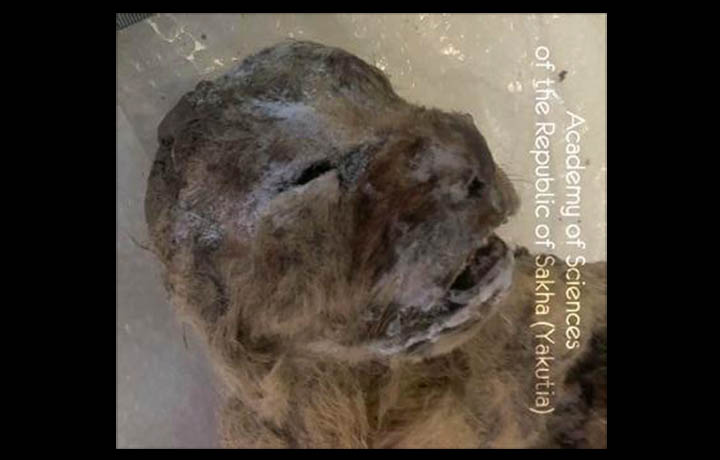
Wednesday, July 1, 2015
Kircher's giants
Athanasius Kircher is perhaps the most interesting mind of the Seventeenth Century. The German born Jesuit wrote over forty books on comparative linguistics, volcanoes, music theory, magnetism, China, diseases, and anything else that crossed his path. He claimed to be able to read Egyptian hieroglyphics, he used the newly-invented microscope and suggested that the tiny "animacules" caused plague and other diseases, he was the first European to publish Sanskrit, he coined he word "electromagnetism", he built a museum of mechanical gadgets, and he designed the cat piano. A recent collection of conference papers about him was entitled "The Last Man Who Knew Everything."
The times he lived in and the broad range of his interests ensured that a lot of what he wrote was bunk and, for almost 300 years, he was dismissed as a colorful crank. Lately, that's begun to change. Kircher was an influential figure in his day and it's not possible to write an accurate account of the scientific revolution without taking him into account. Even before his intellectual rehabilitation began, his books had been rediscovered as objects of art. Many of them are illustrated with fantastic illustrations and interesting maps--one shows the location of Atlantis. One of his most frequently reproduced illustrations compares the sizes of famous giants.
Most cultures have a tradition of giants. I won't say "all", because whenever you say that there will be a cultural anthropologist who will show up to make a liar out of you. But there is quite a rich tradition in what became Western Civilization. The tradition drinks from four fountains. The first, is the mythology of Classical civilizations. This included the Titans, whom the gods of Olympus had to vanquish before they could rule, and the heroes, who must have had a great stature to match their great acts. Next, was the Jewish tradition, which was well known even before Christians made it dogma in the remains of the Roman Empire. This included the Antediluvian giants of Genesis 6; the tribes defeated by Moses, Joshua, and David; and the ancient patriarchs themselves. Third, were the local traditions of Northern regions gradually incorporated in Christendom. Finally, were the actual discoveries of large bones found in caves and plowed up in fields from time to time. By the time Constantine made Christianity the official religion of the Roman Empire, the first two fountains had been combined into a kind of standard list. Over the next thousand years, giants from the other two fountains were added to the list.
Kircher's famous illustration is from the second volume of his wonderful book Mundus Subterraneus (The Underground World). It shows five figures all in the same pose. Two are from ancient sources, two are from recent (to him) sources, and one is a normal man. The four on the right ascend from left to right while the one on the far left overshadows them all. His position, out of order, demonstrates his specialness. The point of the illustration is not to provide visual comparison of famous giants; it is to make a point about that particular giant. Kircher, who later writers would call gullible, thinks that giant is ridiculous.
The biggest giant is from the works of the late Medieval satirist Giovanni Boccaccio. Boccaccio was a pivotal figure in Italian literature, but he was also a literary critic and historian. In his Genealogia deorum gentilium (Genealogy of the Gods and gentiles), he tried to make sense of confused and often contradictory accounts of the Greek and Roman pantheons and, as much as possible, tie them into local histories. The giant illustrated by Kircher was a discovery that happened in Sicily during Boccaccio's lifetime. Some writers have said Boccaccio claimed to have been a witness to the discovery. He didn't. He was 400 miles away in Tuscany at the time and only reported what he was told. So, what was he told?
In 1342, near Trepani, on the western end of Sicily, a group of workers, digging the foundation for a new house, uncovered a deep cave. They climbed in and found a great grotto where they saw the figure of a seated man of almost unimaginable size. In his hand he held a staff as large as ship's mast. According to their report, he was 200 cubits tall (300 or 400 feet, depending on your cubit). The workers hurried back to the village of Erice to share the story of their discovery. Soon, a crowd of 300 people armed with torches and pitchforks marched to the work site and entered the cave. Once inside the grotto, they paused, all frightened and awestruck except for one brave man who stepped forward and touched the staff. It disintegrated leaving only dust and some iron pieces. He then touched the leg of the titan who also turned to dust leaving only some enormous teeth.
The teeth were taken to the Church of the Annunciation where they were strung on a wire to be displayed. This was a common practice in the days before museums. Wonders of nature were given to churches to inspire the faithful with the endless wonders of God's creation. Boccaccio does not report what happened to the iron. We can safely assume that the local blacksmith took advantage of the free materials.
There was some debate over the identity of the giant. Some thought he was Eryx, a legendary early king and founder of the village. Although a demigod himself, Eryx was killed in boxing match with his fellow demigod Hercules. The opposing and more popular theory was that he was the cyclops Polyphemus and this was the cave where he was blinded by Odysseus and his crew. In making that claim, they faced some competition. Over the years, a number of villages had discovered a number of caves containing the bones of a number of giants and all had proclaimed their giant to be Polyphemus. Classics scholars, then and now, believed that the Odyssey described an itinerary of real places around the central Mediterranean and that Sicily was the home of Polyphemus. Even the average peasant knew this and was proud of the history of their island. If the local giant wasn't Polyphemus, enough giants had been found that no one doubted that the island had once been home to a whole race of them.
In the early Twentieth Century, the Austrian paleontologist Otheniel Abel wondered if there was more to the story than mere myth . Fifty years earlier, in 1862, Hugh Falconer, one of the first great authorities on the diversity of extinct proboscideans, had presented a paper on the discovery of the remains of a dwarf elephant on the island of Malta. Falconer named it Elephas melitensis. In the years after that, other dwarfed species were found on most of the major Mediterranean islands. All of these species, except one, are believed to descended from Palaeoloxodon antiquus, the straight-tusked elephant. The exception is a dwarf mammoth that lived on Sardinia. Sicily is especially rich in these fossils, having been home to three different species of dwarfed elephants at different times. Abel thought the skeletons explained the origin of the cyclops myth.
Most land mammals share a basic skeletal structure, but proboscieans and humans have some very specific resemblances. These are mostly in the limbs. Both have long straight limbs with short ankles or wrists and five digits. Laying the disarticulated bones of a probosciean out on the ground, it's easy to form something that looks like an enormous, stocky human. Then comes the problem of the skull. Abel pointed out that the most distinguishing feature of the skull, if the tusks are missing, is a huge hole in the middle of the face. This is the nasal cavity with all of the attachments for the trunk. The eye sockets are on the sides of the skull are almost unnoticeable. This would make it very easy for an awestruck discoverer to mistake the nasal cavity for the socket of a single huge eye.
Other differences in the skulls can be explained by the fact that giants are, by definition, monsters. Add to this the fact that probosciean skulls are not solid and bony. They are made of thin plates, honeycombed with sinuses and, when dried out, tend to fall apart at the first touch leaving nothing to be systematically examined.
Kircher raised some rather sophisticated environmental and bio-mechanical arguments against the possibility of a giant of that size having ever existed. He said it couldn't have been taller than forty feet. His illustration is meant to show how silly the claims of Boccaccio's informants were. Kircher thought the other figures on his illustration were reasonable. Starting next to Boccaccio's monster is the little, tiny figure of a normal human who barely reaches his ankle. Reaching to mid-calf is Goliath of Gath, who normal guy David smote with a stone. The figure on the far right, which Kircher calls the giant of Mauritania, was a skeleton found in Morocco according to the highly respected Roman writer Pliny [actually, it was Plutarch]. To his left was a giant found within the living memory of Kircher's elders and, artistically, the most important influence on his illustration.
When the prominent Basel physician Felix Plater was called to Lucern in 1584 to care for the ailing Colonel Ludwig Pfyffer, he expected to spend his spare time collecting rare plants on the neighboring mountains and visiting with his friend Renward Cysat. He was successful on both counts. He gathered over a hundred samples of plants unknown to him and Cysat had a special treat for him: mysterious bones.
Cysat explained that, seven years earlier, a tremendous storm had buffeted the village of Reyden, a village that Plater had passed through on his way to Lucern. When the brothers of the local monastery came out to inspect the damage, they found that an ancient oak on Kommende Hill had been knocked over. Tangled among it's roots were the bones that Cysat now showed Plater.
Many of the bones were damaged and only a few fragments of the skull remained. Naturally, the workmen were blamed for mishandling them. Plater convinced the city council to let him take them back to Basel with him for study. From the long bones of the arms and legs and, especially, digits that appeared to be a thumb, Plater felt confident in telling the Lucerners that they had the remains of a human giant. By his calculations, it stood fourteen strich tall (nineteen feet) in life. Since giants were not part of any local traditions, he believed that it must have lived and died during some prehistoric time before normal humans arrived in the mountains.
Plater asked Hans Bock, an artist who happened to be painting his portrait at the time, to prepare large drawings of the bones and an imaginative drawing of the giant as it must have appeared in life. In Boch's reconstruction, the heavily bearded giant stands with one hand on a dead tree, perhaps the oak, naked except for a laurel and a girdle of oak leaves. The beard and garb of leaves make him look like the Green Man and probably indicate his primitive state. Despite Plater's conclusion that the giant and normal people had never lived together, Bock included a modern man, gaping in awe at the giant, for comparison.
The Lucerners were delighted, both with Plater's conclusions and with Bock's drawings. The bones were put on display in the city hall and the giant was made the shield-bearer of the city coat of arms. They had a version of Bock's drawing painted on a tower attached to the city hall with a poem telling the story of his discovery. That wasn't the end of the giant's fame. In the next century, Cysat and members of the city council decided to decorate the three footbridges that connected the two parts of the city across the Reuss River. They hired Hans Heinrich Wägmann, a local artist, to paint triangular panels to be hung inside the bridges attached to the roof trusses. Prominent citizens were encouraged to sponsor panels and in return, their family crests were incorporated into the paintings. Cysat bought panel number one on the Chapel Bridge (Kapellbrücke). For the subject, he chose Bock's giant along with a poem that he composed.
Kircher, or his artist, used some version Bock's drawing as the standard giant to illustrate the relative sizes of famous giants and discredit Boccaccio's giant. All six of Kircher's giants have the same posture and attire of Bock's giant. In a modern court of law, that would probably be enough to nail him for plagiarism. In his day, the modern concept of plagiarism was just emerging and the first copyright laws were still a generation in the future. His use of Bock's drawing would have been considered more along the lines of an homage to the original artist than theft.
There were apparently differences among the three original versions of the giant—Bock's drawing, the tower mural, and the Kapellbrücke panel. I only have access to one, but I can make an educated guess at the source of Kitcher's version. Bock's original drawing was sent back to Platter in Basel and ended up in the library of the local Jesuit monastery. Even though Kircher was a Jesuit, he would have had to have visited the monastery to have viewed it. Kircher spend most of his productive life in Italy, rarely going far from Rome. The mural on the tower is gone. After years of neglect, the city decided it was irreparable and had it painted over in the 1860s. I haven't been able to locate any surviving drawings or photographs of it. Later, the stucco was scraped off the tower to reveal the underlying stone walls. In 1993, a fire destroyed most of the Kapellbrücke. Cysat's panel was one only thirty (of the original 158) that was saved. Like Bock's original drawing, Kircher never saw the panel or the tower, though it's possible that he may have seen sketches made by some other traveler. If he did, he didn't mention it.
Kircher's written description of the discovery gives a clue as to where he might have seen the giant. Platter published an account of the discovery in a collection of medical essays in 1614. Kircher's version bears no resemblance to this. Except for short paragraphs before and after, the majority of his account is a long quote of a legal affidavit filed by Cysat in Lucerne. We don't have to look far to discover where found the affidavit.
In 1661, three years before that volume of Mundus Subterraneus appeared, a small book written in German by Cysat's son appeared in Lucern. The book was a history of the city and the surrounding countryside. In the context of describing the towers and bridges of the city, the younger Cysat tells the story of the giant of Reyden. At the center of his narrative is his father's affidavit. He also included the poem from the tower along with a drawing of the giant.
When Platter examined the Reyden bones, the idea of historically real giants was just beginning to be challenged. Because giants are unambiguously mentioned in the Bible, these challenges were in the form of arguments that the Bible used the word giant in an allegorical sense; the giants of the Old Testament were great in their capacity for evil, not in their actual stature. This position did not automatically kill the giants. Writing almost ninety years after the discovery of the Reyden giant, the most Kircher would say was that real giants weren't mush bigger than twenty feet tall. In the early 1700s, the French academy published a flurry of papers arguing both sides of the giant question. As late as 1764, the influential doctor Claude-Nicolas LeCat could receive a polite hearing before the academy while arguing for the historical reality of giants.
What finally did the giants in was the development of the sciences of comparative anatomy and paleontology. When Cysat showed Platter the bones, he had very little to compare them with. He knew whales and elephants were very large animals, but no accurate anatomical information was available to him, not even good drawings. It was only after his death that showmen were able to acquire elephants from India and show them in towns and villages in Europe. The first anatomical studies were in the 1780s, well after Kircher was dead. Paleontology, building on comparative anatomy, took another hundred years to develop.
In 1783, the young naturalist Johann Friedrich Blumenbach traveled through Switzerland. He knew the story of the giant of Reyden and wanted to see what the truth was. In Lucerne, he found that Platter had returned the bones to Cysat who put them back in their place of honor in the Council Hall. By then, only three fragments survived. After an examination, he felt confident identifying them as the bones of an elephant. His confidence was as strong as Platter's and more accurate. Thirteen years later, he was one of the first to decide that the mammoth and mastodon were distinct species, different from the known species of elephants (he was also one of the first to assert that Asian and African elephants were different species).
By 2013, only one fragment remained in Lucerne. It now resided in the Lucerne Natural History Museum instead of the Council Hall. That February, the keeper of the museum website and Adelheid Aregger, a journalist with an interest in cultural matters, got into a conversation about the bones. Looking over Blumenbach's account of his visit they realized that he had taken pieces with him when he left. Aregger and her husband continued to look into the story. The Blumenbach collection at Göttingen included quite a few bones. Using isotope analysis, they were able to identify two pieces of mammoth thigh that had come from the same soil as the as the remaining piece in Lucerne. Kircher got blacklight posters and the Lucerne bones didn't. But they're still pretty cool.
The times he lived in and the broad range of his interests ensured that a lot of what he wrote was bunk and, for almost 300 years, he was dismissed as a colorful crank. Lately, that's begun to change. Kircher was an influential figure in his day and it's not possible to write an accurate account of the scientific revolution without taking him into account. Even before his intellectual rehabilitation began, his books had been rediscovered as objects of art. Many of them are illustrated with fantastic illustrations and interesting maps--one shows the location of Atlantis. One of his most frequently reproduced illustrations compares the sizes of famous giants.
Kircher's Giants. Source.
Most cultures have a tradition of giants. I won't say "all", because whenever you say that there will be a cultural anthropologist who will show up to make a liar out of you. But there is quite a rich tradition in what became Western Civilization. The tradition drinks from four fountains. The first, is the mythology of Classical civilizations. This included the Titans, whom the gods of Olympus had to vanquish before they could rule, and the heroes, who must have had a great stature to match their great acts. Next, was the Jewish tradition, which was well known even before Christians made it dogma in the remains of the Roman Empire. This included the Antediluvian giants of Genesis 6; the tribes defeated by Moses, Joshua, and David; and the ancient patriarchs themselves. Third, were the local traditions of Northern regions gradually incorporated in Christendom. Finally, were the actual discoveries of large bones found in caves and plowed up in fields from time to time. By the time Constantine made Christianity the official religion of the Roman Empire, the first two fountains had been combined into a kind of standard list. Over the next thousand years, giants from the other two fountains were added to the list.
Kircher's famous illustration is from the second volume of his wonderful book Mundus Subterraneus (The Underground World). It shows five figures all in the same pose. Two are from ancient sources, two are from recent (to him) sources, and one is a normal man. The four on the right ascend from left to right while the one on the far left overshadows them all. His position, out of order, demonstrates his specialness. The point of the illustration is not to provide visual comparison of famous giants; it is to make a point about that particular giant. Kircher, who later writers would call gullible, thinks that giant is ridiculous.
The biggest giant is from the works of the late Medieval satirist Giovanni Boccaccio. Boccaccio was a pivotal figure in Italian literature, but he was also a literary critic and historian. In his Genealogia deorum gentilium (Genealogy of the Gods and gentiles), he tried to make sense of confused and often contradictory accounts of the Greek and Roman pantheons and, as much as possible, tie them into local histories. The giant illustrated by Kircher was a discovery that happened in Sicily during Boccaccio's lifetime. Some writers have said Boccaccio claimed to have been a witness to the discovery. He didn't. He was 400 miles away in Tuscany at the time and only reported what he was told. So, what was he told?
In 1342, near Trepani, on the western end of Sicily, a group of workers, digging the foundation for a new house, uncovered a deep cave. They climbed in and found a great grotto where they saw the figure of a seated man of almost unimaginable size. In his hand he held a staff as large as ship's mast. According to their report, he was 200 cubits tall (300 or 400 feet, depending on your cubit). The workers hurried back to the village of Erice to share the story of their discovery. Soon, a crowd of 300 people armed with torches and pitchforks marched to the work site and entered the cave. Once inside the grotto, they paused, all frightened and awestruck except for one brave man who stepped forward and touched the staff. It disintegrated leaving only dust and some iron pieces. He then touched the leg of the titan who also turned to dust leaving only some enormous teeth.
The teeth were taken to the Church of the Annunciation where they were strung on a wire to be displayed. This was a common practice in the days before museums. Wonders of nature were given to churches to inspire the faithful with the endless wonders of God's creation. Boccaccio does not report what happened to the iron. We can safely assume that the local blacksmith took advantage of the free materials.
There was some debate over the identity of the giant. Some thought he was Eryx, a legendary early king and founder of the village. Although a demigod himself, Eryx was killed in boxing match with his fellow demigod Hercules. The opposing and more popular theory was that he was the cyclops Polyphemus and this was the cave where he was blinded by Odysseus and his crew. In making that claim, they faced some competition. Over the years, a number of villages had discovered a number of caves containing the bones of a number of giants and all had proclaimed their giant to be Polyphemus. Classics scholars, then and now, believed that the Odyssey described an itinerary of real places around the central Mediterranean and that Sicily was the home of Polyphemus. Even the average peasant knew this and was proud of the history of their island. If the local giant wasn't Polyphemus, enough giants had been found that no one doubted that the island had once been home to a whole race of them.
In the early Twentieth Century, the Austrian paleontologist Otheniel Abel wondered if there was more to the story than mere myth . Fifty years earlier, in 1862, Hugh Falconer, one of the first great authorities on the diversity of extinct proboscideans, had presented a paper on the discovery of the remains of a dwarf elephant on the island of Malta. Falconer named it Elephas melitensis. In the years after that, other dwarfed species were found on most of the major Mediterranean islands. All of these species, except one, are believed to descended from Palaeoloxodon antiquus, the straight-tusked elephant. The exception is a dwarf mammoth that lived on Sardinia. Sicily is especially rich in these fossils, having been home to three different species of dwarfed elephants at different times. Abel thought the skeletons explained the origin of the cyclops myth.
Most land mammals share a basic skeletal structure, but proboscieans and humans have some very specific resemblances. These are mostly in the limbs. Both have long straight limbs with short ankles or wrists and five digits. Laying the disarticulated bones of a probosciean out on the ground, it's easy to form something that looks like an enormous, stocky human. Then comes the problem of the skull. Abel pointed out that the most distinguishing feature of the skull, if the tusks are missing, is a huge hole in the middle of the face. This is the nasal cavity with all of the attachments for the trunk. The eye sockets are on the sides of the skull are almost unnoticeable. This would make it very easy for an awestruck discoverer to mistake the nasal cavity for the socket of a single huge eye.
Elephas melitensis. Source.
Other differences in the skulls can be explained by the fact that giants are, by definition, monsters. Add to this the fact that probosciean skulls are not solid and bony. They are made of thin plates, honeycombed with sinuses and, when dried out, tend to fall apart at the first touch leaving nothing to be systematically examined.
Kircher raised some rather sophisticated environmental and bio-mechanical arguments against the possibility of a giant of that size having ever existed. He said it couldn't have been taller than forty feet. His illustration is meant to show how silly the claims of Boccaccio's informants were. Kircher thought the other figures on his illustration were reasonable. Starting next to Boccaccio's monster is the little, tiny figure of a normal human who barely reaches his ankle. Reaching to mid-calf is Goliath of Gath, who normal guy David smote with a stone. The figure on the far right, which Kircher calls the giant of Mauritania, was a skeleton found in Morocco according to the highly respected Roman writer Pliny [actually, it was Plutarch]. To his left was a giant found within the living memory of Kircher's elders and, artistically, the most important influence on his illustration.
When the prominent Basel physician Felix Plater was called to Lucern in 1584 to care for the ailing Colonel Ludwig Pfyffer, he expected to spend his spare time collecting rare plants on the neighboring mountains and visiting with his friend Renward Cysat. He was successful on both counts. He gathered over a hundred samples of plants unknown to him and Cysat had a special treat for him: mysterious bones.
Cysat explained that, seven years earlier, a tremendous storm had buffeted the village of Reyden, a village that Plater had passed through on his way to Lucern. When the brothers of the local monastery came out to inspect the damage, they found that an ancient oak on Kommende Hill had been knocked over. Tangled among it's roots were the bones that Cysat now showed Plater.
Many of the bones were damaged and only a few fragments of the skull remained. Naturally, the workmen were blamed for mishandling them. Plater convinced the city council to let him take them back to Basel with him for study. From the long bones of the arms and legs and, especially, digits that appeared to be a thumb, Plater felt confident in telling the Lucerners that they had the remains of a human giant. By his calculations, it stood fourteen strich tall (nineteen feet) in life. Since giants were not part of any local traditions, he believed that it must have lived and died during some prehistoric time before normal humans arrived in the mountains.
Plater asked Hans Bock, an artist who happened to be painting his portrait at the time, to prepare large drawings of the bones and an imaginative drawing of the giant as it must have appeared in life. In Boch's reconstruction, the heavily bearded giant stands with one hand on a dead tree, perhaps the oak, naked except for a laurel and a girdle of oak leaves. The beard and garb of leaves make him look like the Green Man and probably indicate his primitive state. Despite Plater's conclusion that the giant and normal people had never lived together, Bock included a modern man, gaping in awe at the giant, for comparison.
The Lucerners were delighted, both with Plater's conclusions and with Bock's drawings. The bones were put on display in the city hall and the giant was made the shield-bearer of the city coat of arms. They had a version of Bock's drawing painted on a tower attached to the city hall with a poem telling the story of his discovery. That wasn't the end of the giant's fame. In the next century, Cysat and members of the city council decided to decorate the three footbridges that connected the two parts of the city across the Reuss River. They hired Hans Heinrich Wägmann, a local artist, to paint triangular panels to be hung inside the bridges attached to the roof trusses. Prominent citizens were encouraged to sponsor panels and in return, their family crests were incorporated into the paintings. Cysat bought panel number one on the Chapel Bridge (Kapellbrücke). For the subject, he chose Bock's giant along with a poem that he composed.
The giant of Reyden displayed on the Kapellbrücke. Source.
Kircher, or his artist, used some version Bock's drawing as the standard giant to illustrate the relative sizes of famous giants and discredit Boccaccio's giant. All six of Kircher's giants have the same posture and attire of Bock's giant. In a modern court of law, that would probably be enough to nail him for plagiarism. In his day, the modern concept of plagiarism was just emerging and the first copyright laws were still a generation in the future. His use of Bock's drawing would have been considered more along the lines of an homage to the original artist than theft.
There were apparently differences among the three original versions of the giant—Bock's drawing, the tower mural, and the Kapellbrücke panel. I only have access to one, but I can make an educated guess at the source of Kitcher's version. Bock's original drawing was sent back to Platter in Basel and ended up in the library of the local Jesuit monastery. Even though Kircher was a Jesuit, he would have had to have visited the monastery to have viewed it. Kircher spend most of his productive life in Italy, rarely going far from Rome. The mural on the tower is gone. After years of neglect, the city decided it was irreparable and had it painted over in the 1860s. I haven't been able to locate any surviving drawings or photographs of it. Later, the stucco was scraped off the tower to reveal the underlying stone walls. In 1993, a fire destroyed most of the Kapellbrücke. Cysat's panel was one only thirty (of the original 158) that was saved. Like Bock's original drawing, Kircher never saw the panel or the tower, though it's possible that he may have seen sketches made by some other traveler. If he did, he didn't mention it.
Kircher's written description of the discovery gives a clue as to where he might have seen the giant. Platter published an account of the discovery in a collection of medical essays in 1614. Kircher's version bears no resemblance to this. Except for short paragraphs before and after, the majority of his account is a long quote of a legal affidavit filed by Cysat in Lucerne. We don't have to look far to discover where found the affidavit.
In 1661, three years before that volume of Mundus Subterraneus appeared, a small book written in German by Cysat's son appeared in Lucern. The book was a history of the city and the surrounding countryside. In the context of describing the towers and bridges of the city, the younger Cysat tells the story of the giant of Reyden. At the center of his narrative is his father's affidavit. He also included the poem from the tower along with a drawing of the giant.
Young Cysat's illustration. Source.
When Platter examined the Reyden bones, the idea of historically real giants was just beginning to be challenged. Because giants are unambiguously mentioned in the Bible, these challenges were in the form of arguments that the Bible used the word giant in an allegorical sense; the giants of the Old Testament were great in their capacity for evil, not in their actual stature. This position did not automatically kill the giants. Writing almost ninety years after the discovery of the Reyden giant, the most Kircher would say was that real giants weren't mush bigger than twenty feet tall. In the early 1700s, the French academy published a flurry of papers arguing both sides of the giant question. As late as 1764, the influential doctor Claude-Nicolas LeCat could receive a polite hearing before the academy while arguing for the historical reality of giants.
What finally did the giants in was the development of the sciences of comparative anatomy and paleontology. When Cysat showed Platter the bones, he had very little to compare them with. He knew whales and elephants were very large animals, but no accurate anatomical information was available to him, not even good drawings. It was only after his death that showmen were able to acquire elephants from India and show them in towns and villages in Europe. The first anatomical studies were in the 1780s, well after Kircher was dead. Paleontology, building on comparative anatomy, took another hundred years to develop.
In 1783, the young naturalist Johann Friedrich Blumenbach traveled through Switzerland. He knew the story of the giant of Reyden and wanted to see what the truth was. In Lucerne, he found that Platter had returned the bones to Cysat who put them back in their place of honor in the Council Hall. By then, only three fragments survived. After an examination, he felt confident identifying them as the bones of an elephant. His confidence was as strong as Platter's and more accurate. Thirteen years later, he was one of the first to decide that the mammoth and mastodon were distinct species, different from the known species of elephants (he was also one of the first to assert that Asian and African elephants were different species).
The last of the Reyden giant. Source.
By 2013, only one fragment remained in Lucerne. It now resided in the Lucerne Natural History Museum instead of the Council Hall. That February, the keeper of the museum website and Adelheid Aregger, a journalist with an interest in cultural matters, got into a conversation about the bones. Looking over Blumenbach's account of his visit they realized that he had taken pieces with him when he left. Aregger and her husband continued to look into the story. The Blumenbach collection at Göttingen included quite a few bones. Using isotope analysis, they were able to identify two pieces of mammoth thigh that had come from the same soil as the as the remaining piece in Lucerne. Kircher got blacklight posters and the Lucerne bones didn't. But they're still pretty cool.
Subscribe to:
Comments (Atom)


